

Kyoto may be one of Japan’s most rewarding cities to explore, but you do not have to travel far to see a very different side of the country.
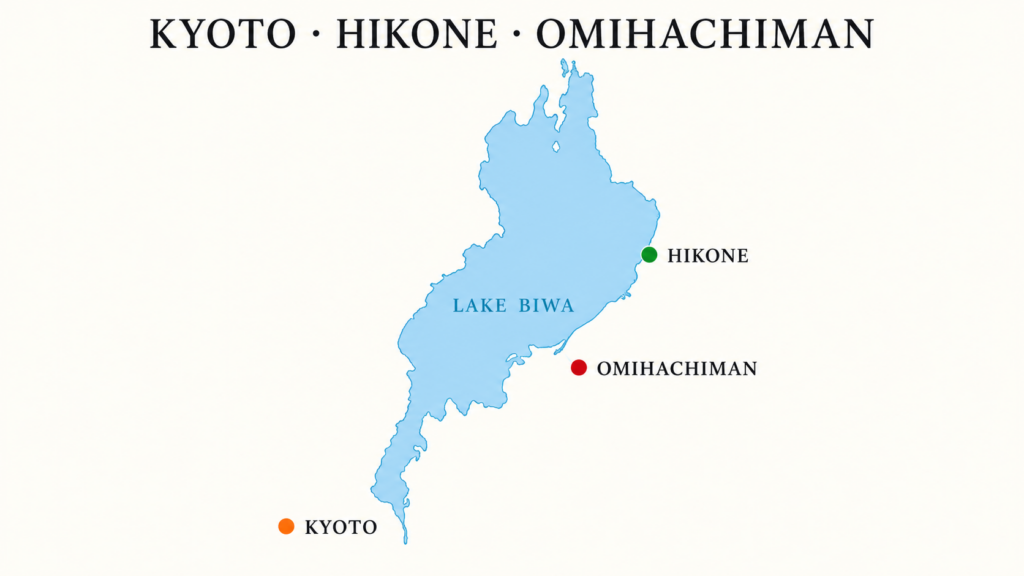
A Shiga day trip from Kyoto is an easy way to discover historic Hikone Castle, the charming streets of Omihachiman, and the natural beauty of Lake Biwa.
Just east of Kyoto lies Shiga Prefecture, home to Lake Biwa, Japan’s largest lake, as well as historic castle towns, merchant districts, gardens, and a food culture shaped by centuries of local history.
For travelers with one full day to spare, a route from Kyoto to Hikone and Omihachiman offers an especially interesting contrast. In the morning, you can walk through one of Japan’s best-preserved historic castle complexes. By afternoon, you can explore canals and merchant streets that once connected the region’s commerce to Lake Biwa.
And you can do it without renting a car.
Shiga Day Trip from Kyoto at a Glance
Route: Kyoto → Hikone → Omihachiman → Kyoto
Recommended time: Full day
Transportation: Train + walking + local transportation
Best for: History, architecture, local culture, food, and photography
Car needed: No
Main highlights: Hikone Castle, Genkyu-en Garden, Omi Beef, Hachimanbori Moat, historic Omihachiman, and views toward Lake Biwa
This is a fairly active day, so leaving Kyoto early gives you much more freedom to explore without rushing.
Why Take a Day Trip from Kyoto to Shiga?
Shiga is remarkably close to Kyoto.
The prefectural tourism authority lists Otsu, Shiga’s capital, at about nine minutes from Kyoto by JR Special Rapid Service, while Omihachiman’s official tourism information describes the city as roughly 40 minutes from Kyoto by train.
But geographical proximity does not mean the two destinations feel the same.
Kyoto developed as an imperial capital. Hikone grew around a powerful samurai castle. Omihachiman became known for commerce and the merchants who built trading networks across Japan.
Lake Biwa ties much of this history together.
Rather than treating Shiga as simply another collection of sightseeing spots, this itinerary follows a progression through several sides of the region:
samurai castle → daimyo garden → local food → merchant town → Lake Biwa landscape
That is what makes the journey worth considering.
Morning: Travel from Kyoto to Hikone
Start early at Kyoto Station and travel northeast toward Hikone on the JR network.
Train schedules and fares can change, so check current JR information before departure rather than relying on a fixed timetable. For a full-day itinerary combining Hikone and Omihachiman, an early start is strongly recommended.
After arriving at Hikone Station, the castle area can be reached on foot. Hikone Castle’s official information places the station roughly 900 meters from the castle area, making it practical for travelers exploring without a car.
The approach also helps establish the character of Hikone: this is not simply an isolated castle tower, but a city whose modern streets still revolve around its historic center.
Explore Hikone Castle

Hikone Castle is the natural starting point for understanding the city.
Construction began in the early seventeenth century, and the castle was completed in 1622. Unlike many Japanese castles whose main towers are later reconstructions, Hikone retains its original keep.
It is one of only twelve surviving original castle keeps in Japan and one of five designated National Treasures.
That distinction matters.
Inside and around the castle, visitors are not simply looking at a modern reproduction of a feudal landmark. Much of the surviving complex preserves the physical structure of the castle and its relationship to the surrounding town.
The castle’s official visitor information says a basic visit takes a little under an hour, although travelers interested in the grounds, architecture, views, and adjacent garden should allow considerably longer.
Be Ready for Stairs
Hikone Castle sits on elevated ground.
The official castle website notes that there are roughly 140 steps on the way to the National Treasure keep, and the interior of an original Japanese castle is very different from a modern museum building.
Wear comfortable walking shoes and allow extra time if steep stairs are difficult for you.
During hot weather, carry water. The castle administration specifically advises visitors to bring their own drinks because beverage facilities inside the wider castle grounds are limited.
Current Admission
As of the latest official information checked for this article, general adult admission to Hikone Castle and Genkyu-en Garden is ¥1,000.
Because admission fees, access conditions, and special events can change, confirm the latest information on the official Hikone Castle website before visiting.
Slow Down at Genkyu-en Garden
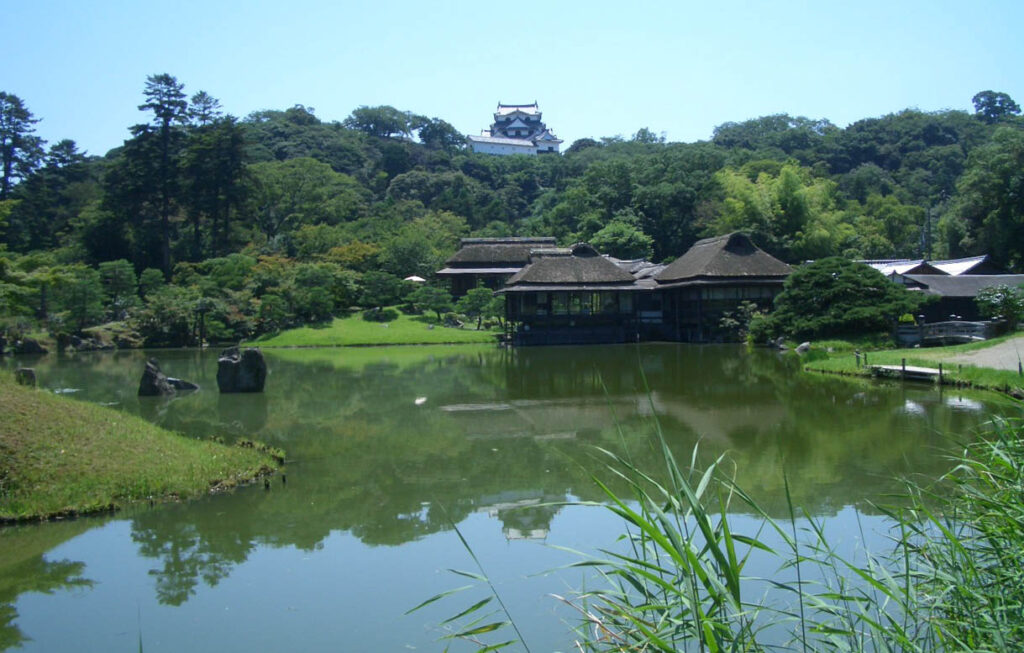
Do not leave Hikone as soon as you have seen the castle keep.
Beside the castle is Genkyu-en, a traditional strolling garden centered on a large pond, with islands, bridges, and carefully composed views of the surrounding landscape.
The garden changes the rhythm of the visit.
Hikone Castle communicates defense, authority, and political power. Genkyu-en shows another side of the world inhabited by the castle lords: landscape design, hospitality, and cultivated leisure.
Seen together, the castle and garden provide a much fuller picture of Hikone than the keep alone.
Lunch in Hikone: Try Omi Beef
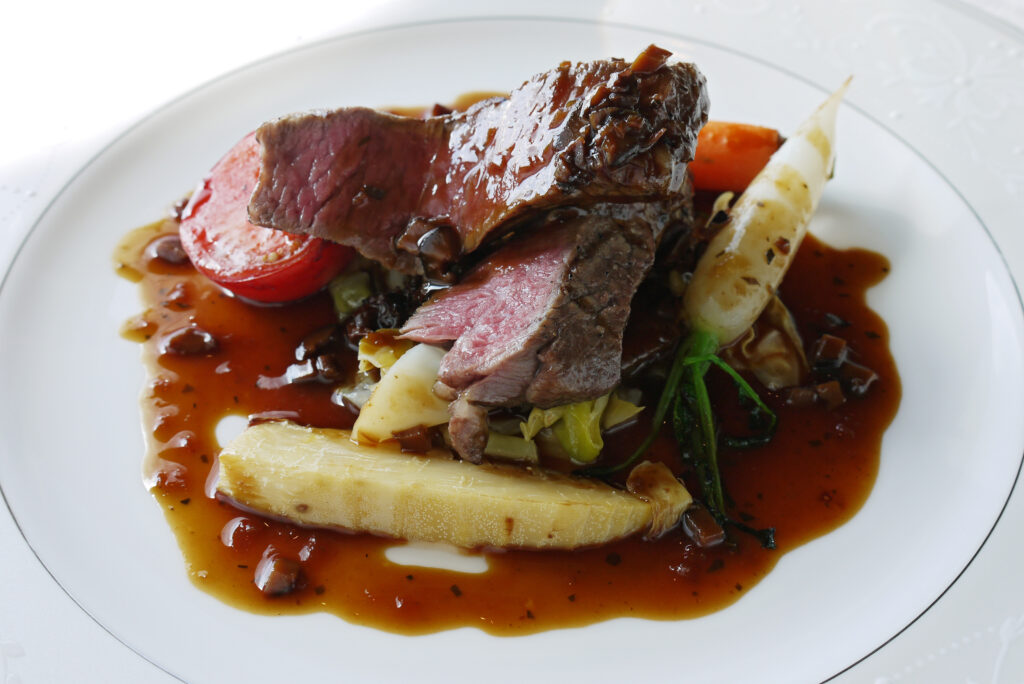
Photo: 663highland / Wikimedia Commons / CC BY-SA 3.0After exploring the castle area, head toward Yume-Kyobashi Castle Road for lunch.
The street sits near the castle moat and was designed with white walls and black latticework that recall the appearance of an Edo-period castle town. Today it contains restaurants, confectionery shops, souvenir stores, and other businesses.
This is also a good place to look for one of Shiga’s signature foods: Omi Beef.
What Is Omi Beef?
Omi Beef is wagyu produced in Shiga Prefecture.
It is commonly grouped with Kobe and Matsusaka among Japan’s best-known regional wagyu brands, but its connection to Shiga is much deeper than a modern luxury-food label.
Omihachiman’s official tourism information traces the history of Omi Beef back roughly 400 years. Beef consumption was heavily restricted during much of premodern Japan, but cattle in Omi had unusual historical connections to both practical use and food culture.
Later, improved transportation helped Omi Beef reach markets beyond the region.
For travelers, that makes an Omi Beef lunch more than simply an opportunity to eat wagyu. It is a way to connect the meal directly to the region you are exploring.
Restaurant hours and closing days vary, so check current information if eating at a particular restaurant is important to your itinerary.
Afternoon: From a Samurai Castle Town to a Merchant Town
After lunch, return to Hikone Station and continue by train to Omihachiman.
The change of setting is one of the strongest parts of this itinerary.
Hikone tells a story centered on samurai authority and a powerful feudal domain.
Omihachiman tells another story.
Founded as a castle town in 1585, the city later flourished as a commercial center. Its merchants developed trading networks far beyond Shiga, and traces of that prosperity remain in the historic district today.
Once you arrive at Omihachiman Station, use local transportation to reach the historic Hachimanbori area. Check current bus schedules before traveling, particularly later in the afternoon.
For local sightseeing information and transportation guidance, visit the official Omihachiman Tourism website.
Walk Along Hachimanbori Moat
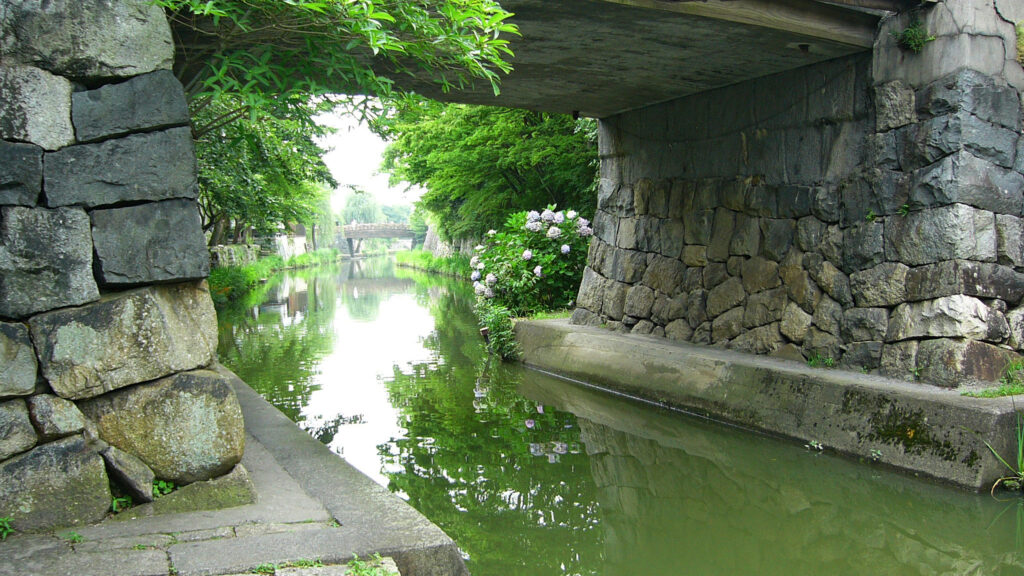
Hachimanbori Moat is one of the most visually distinctive parts of Omihachiman.
The artificial waterway extends for approximately 4.7 kilometers, while its historic central section is lined with white-walled storehouses and traditional wooden buildings.
But Hachimanbori was not created simply to make the town attractive.
It dates to 1585, when Toyotomi Hidetsugu developed Hachimanyama Castle and the town below it.
The moat served a defensive purpose, but it also worked as a transportation canal connecting the town with Lake Biwa.
Goods could move through this water network toward major centers including Kyoto, Osaka, and Edo—present-day Tokyo.
That connection helped Omihachiman grow into a prosperous commercial town.
Why Hachimanbori Matters
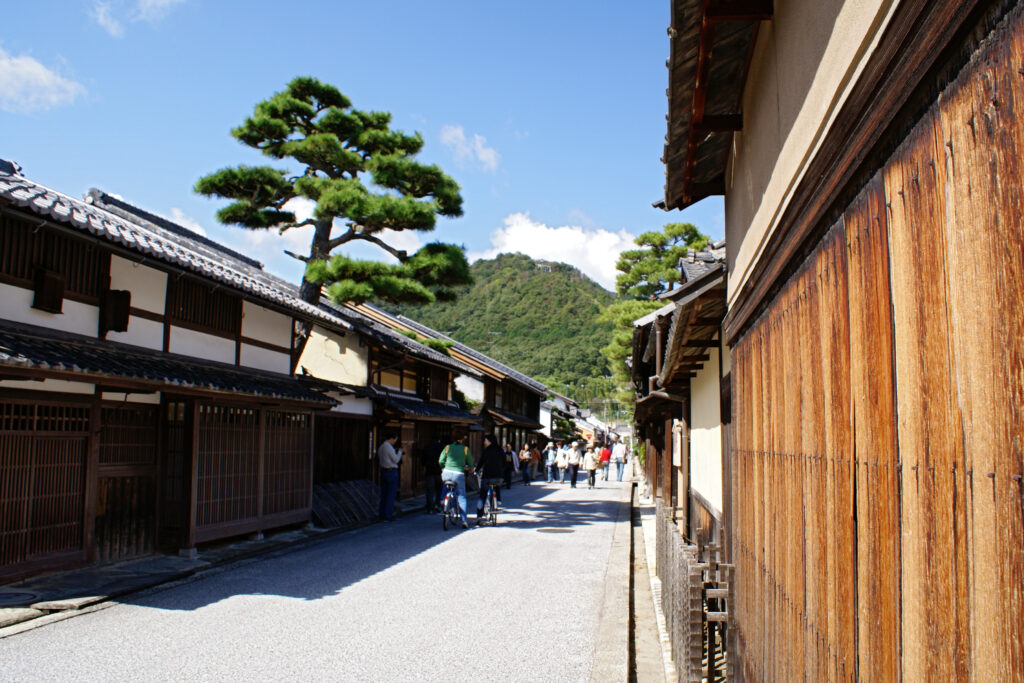
Understanding that history changes the way the canal looks.
The storehouses beside the water were part of a commercial landscape. The canal was infrastructure. Lake Biwa was not simply scenery in the distance; it was part of the network that helped people, goods, and information move through the region.
Even after Hachimanyama Castle was abandoned, commerce continued to shape the town.
Omi merchants eventually operated across Japan, trading goods and building extensive business networks. Their success can still be seen in historic merchant residences and streets around Omihachiman.
There is another layer to the Hachimanbori story.
By the twentieth century, the canal had deteriorated badly, and plans were made to fill it in. Local residents opposed the loss of the historic waterway and became involved in preservation and cleanup efforts.
The canal survived.
Today, the preserved landscape is part of what allows visitors to understand Omihachiman’s history rather than simply read about it.
Optional: Ride the Hachimanyama Ropeway
If you still have enough time before late afternoon, consider adding the Hachimanyama Ropeway.
The ropeway climbs 272-meter Mount Hachimanyama, the site of the former Hachimanyama Castle.
The ride itself takes about four minutes.
From the mountain, visitors can look across Omihachiman and the surrounding landscape. From the northern observation area, views extend toward Lake Biwa and the Hira Mountains.
As of the latest official information checked for this article, the ropeway operates year-round, generally from 9:00 a.m. to 5:00 p.m., with the last uphill departure at 4:30 p.m. The current listed adult round-trip fare is ¥950.
Treat the ropeway as an optional addition rather than a required part of the day. If you spend longer at Hikone Castle, enjoy a leisurely lunch, or arrive in Omihachiman later than planned, exploring Hachimanbori properly is more valuable than rushing through both.
Always check the latest operating hours and ticket prices on the official Hachimanyama Ropeway website before visiting.
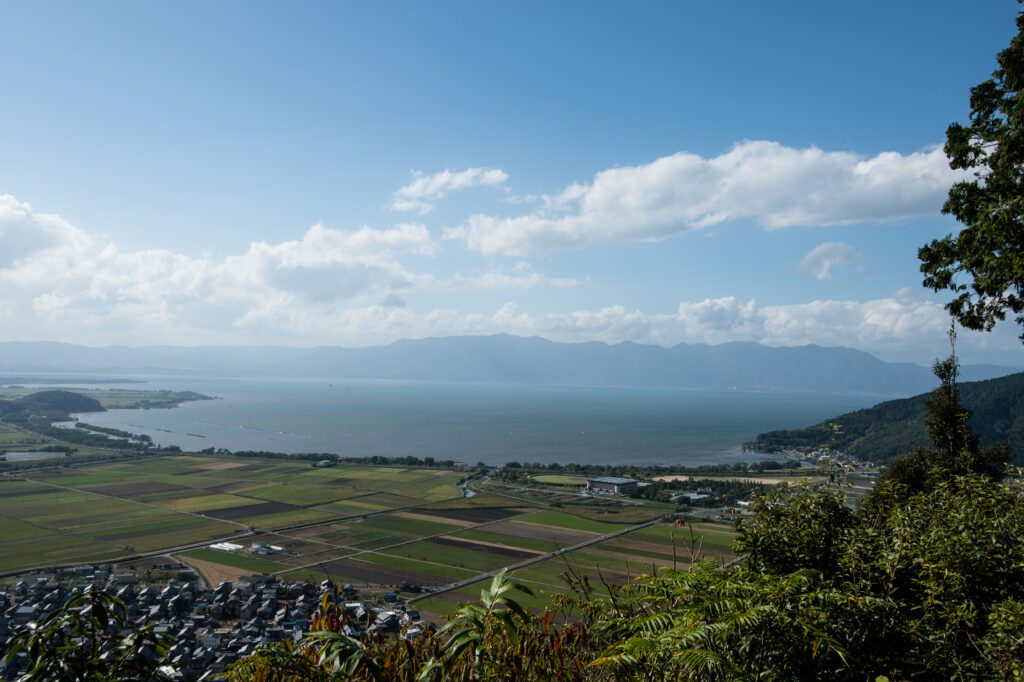
See How Lake Biwa Shaped the Region
You do not need to add another distant destination simply to include Lake Biwa in this itinerary.
The lake is already part of the story.
Lake Biwa helped connect Omihachiman with other commercial centers. Waterways running through the surrounding wetlands linked the town to the lake, supporting transportation, fishing, agriculture, and local life.
From higher ground around Hachimanyama, the geographical relationship becomes easier to understand.
The lake, wetlands, canals, merchant town, and surrounding settlements are not separate attractions. They developed in relation to one another.
That connection is one of the reasons Shiga rewards travelers who look beyond a checklist of famous sights.
Suggested One-Day Shiga Itinerary from Kyoto
Use this as a framework rather than a rigid timetable.
| Time of Day | Plan |
|---|---|
| Early morning | Leave Kyoto for Hikone |
| Morning | Walk to and explore Hikone Castle |
| Late morning | Visit Genkyu-en Garden |
| Around noon | Lunch near the castle; consider Omi Beef |
| Early afternoon | Travel from Hikone to Omihachiman |
| Afternoon | Explore Hachimanbori and the historic district |
| Late afternoon | Optional Hachimanyama Ropeway if time allows |
| Evening | Return to Kyoto |
Actual train and bus times should be checked on the day of travel.
If you prefer slow travel, photography, museums, or long meals, trying to cover both cities in one day may feel rushed. In that case, choose either Hikone or Omihachiman for a deeper day trip—or stay overnight in Shiga.
Practical Tips for a Shiga Day Trip
Start Early
This itinerary works best as a full day.
Leaving Kyoto early gives you time to explore Hikone before moving south to Omihachiman and also creates a buffer for meals, local transportation, and seasonal crowds.
Expect Plenty of Walking
Hikone Castle includes slopes and stairs, while both historic areas are best appreciated on foot.
Comfortable shoes matter more here than trying to dress formally for historic surroundings.
Check Transportation on the Day
Rail and bus schedules can change.
Use current JR and local transportation information before departure, especially when planning the connection between Omihachiman Station and the historic district.
Summer Requires Extra Preparation
Hikone Castle involves climbing, and the castle administration warns visitors to prepare for heat and carry water.
In July and August in particular, build in rest stops and avoid planning the day too tightly.
Winter Can Change the Experience
Shiga can receive snow.
Hikone Castle has previously restricted access to some hillside routes during heavy snowfall, so winter travelers should check current castle and weather information before leaving Kyoto.
Spring and Autumn Can Be Busier
Cherry blossom season, autumn foliage periods, public holidays, and special events can bring additional visitors.
Shiga should not be treated as a guaranteed “crowd-free” alternative to Kyoto.
The advantage is different: it gives you access to a different regional story within easy reach of Kyoto.
Have More Than One Day in Shiga?
A single day gives you an introduction, not the whole prefecture.
With more time, Shiga opens up considerably.
You could continue around Lake Biwa, spend more time in Hikone, explore Nagahama, visit temples and historic communities, discover the lake’s islands and wetlands, or build a slower itinerary around local food and waterfront scenery.
Omihachiman alone can easily justify more time if you add merchant houses, architecture associated with William Merrell Vories, a canal boat ride, or the surrounding wetlands.
That is also where Shiga begins to make more sense as a destination in its own right rather than simply a day trip from Kyoto.
From Kyoto to a Different Side of Japan
The distance from Kyoto to Shiga is short, but the story changes quickly.
In Hikone, the landscape is shaped by a surviving samurai castle and the political world that surrounded it.
In Omihachiman, the focus shifts toward merchants, waterways, trade, and a town whose prosperity was closely connected to Lake Biwa.
Add a local Omi Beef lunch and the changing scenery between the two cities, and one day becomes a compact introduction to a part of Japan that many Kyoto itineraries pass by.
You do not need a car, and you do not need to travel halfway across the country.
Sometimes exploring deeper into Japan begins with simply taking the train a little farther.